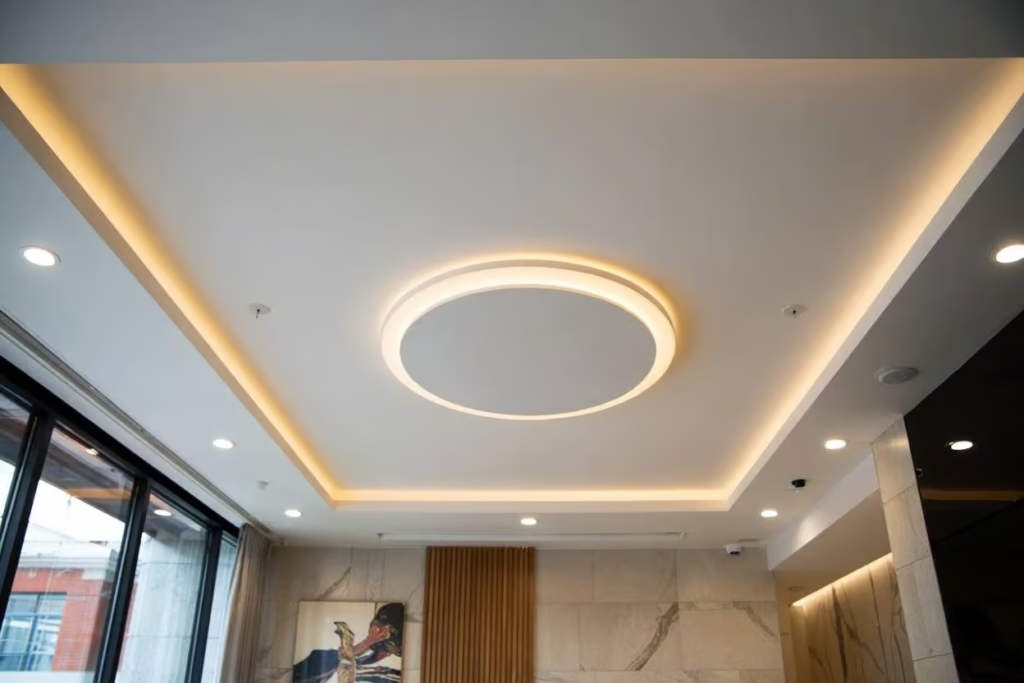
Considering upgrading your home’s lighting? Recessed lighting could be just the thing you need. It’s modern, sleek, and disappears into the ceiling. No bulky fixtures, no cords hanging down. Just clean, soft light that makes any room feel polished and inviting.
Homeowners and designers love recessed lighting because it brightens up a space without adding any clutter. You see it in kitchens, bathrooms, hallways, and living rooms. It’s low profile, looks great, and works even better.
But not all recessed lights are the same. If you’ve done any looking around, you’ve probably seen two main types: can and canless. They look the same, but they install differently, they perform differently, and they can impact your budget and your ceiling space in a big way.
So which one should you choose? Let’s break it down for you, so you can make the right choice without getting lost in the technical jargon.
What Is Can Recessed Lighting?
Can recessed lighting is a type of light fixture installed into a hollow opening in the ceiling, where the light sits inside a metal can-shaped housing, creating a clean, flush appearance with only the trim and light visible from below.
Here’s what it’s made of:
- Housing (the “can”) – This is the main structure that’s hidden in the ceiling. It holds the wiring and bulb and helps direct the light down.
- Trim – This is the visible part of the light. It gives the fixture a finished look and is available in various styles to match your room.
- Bulb – You can typically use standard LED, incandescent, or even smart light bulbs, depending on your setup.
With can lighting, the whole housing is physically installed into the ceiling between joists. That usually means cutting a larger hole and ensuring there is sufficient space above the ceiling surface. It’s been the standard for years, especially in older homes and larger spaces.
Advantages:
- You can replace parts individually – If the trim or bulb stops working, no need to toss the whole thing.
- Better for insulation – Some housing can be IC-rated (Insulation Contact), meaning they can safely touch insulation without becoming a fire hazard.
- Built to last – They’re more rugged, especially in areas like high ceilings, attics, or where lights are used for many hours a day.
Drawbacks:
- Needs more ceiling space – The housing adds depth, so it’s not ideal for shallow ceilings or concrete barriers.
- Takes more time to install – You have to measure, cut, wire, and mount everything properly.
- Usually requires a pro – Unless you’re super handy, it’s a job most people leave to electricians.
So, while can recessed lighting offers durability and flexibility, it does come with a few extra steps—and potentially additional costs.
What Are Canless Recessed Lights?
Canless recessed lights are modern LED fixtures that install directly into the ceiling without needing a separate can or housing. They utilize a built-in junction box and are ideal for ceilings with limited space or where traditional can lights cannot be installed.
No bulky housing. No deep holes in your ceiling. Just a super-slim disc that tucks right into the drywall.
Advantages:
- Easier to install – You can cut a small hole, wire it up, and pop the light in—no joist bracing or extra mounting brackets required.
- Great for tight spaces – If you’ve got limited ceiling depth, these lights slide in easily without needing major structural changes.
- Energy-saving – Since they use built-in LEDs, they consume less power and last for years, often rated for over 30,000 hours of use.
Drawbacks:
- You can’t swap out parts – If the LED fails, the whole fixture usually needs replacing. No changing bulbs here.
- Not always insulation-friendly – Some models can overheat if installed too close to insulation, unless they’re rated for it (look for IC-rated canless models).
- Shorter fix-it window – If something goes wrong, you’re more likely to replace the whole light than repair it.
So, canless recessed lighting is all about speed, simplicity, and sleekness, but it trades in some of the flexibility and repair options you get with traditional can lights.
Key Differences: Can vs Canless Recessed Lighting
So now that we’ve looked at both styles on their own, let’s put them side by side. Whether you’re renovating your entire home or just upgrading one room, it helps to see how can and canless lights stack up across the things that matter—like design, installation, space, and cost.